
Spotted an Odd Coin in an Old Jar? Here's How to Actually Check Its Worth
Rare Coin Scanner & Identifier points your camera at a coin and estimates its origin, mint year, and market value within seconds - a quick first check before you toss it back in with the spare change.
Key Takeaways
- Photo quality drives how accurate it is - even lighting, a plain background, and a straight overhead shot all meaningfully help identification.
- Age by itself doesn't set value; mintage figures, printing errors, and condition matter as much, if not more, than how old a coin actually is.
- Never clean a coin before it's evaluated - collectors treat cleaning as damage that lowers value, not as an improvement, essentially across the board.
- Treat any in-app value figure as a starting point for research, not a formal appraisal, especially before you try to sell anything.
Get this app
About this app
Grandpa's old coin jar finally got sorted out, and sitting in the middle of the ordinary pocket change is one coin that just looks off - the wrong color, the wrong weight, a date that seems too old to have stayed in circulation this long. Basically every coin-collector story starts exactly this way, and most people have zero way of knowing if theirs is actually one of them.
What the app is actually doing
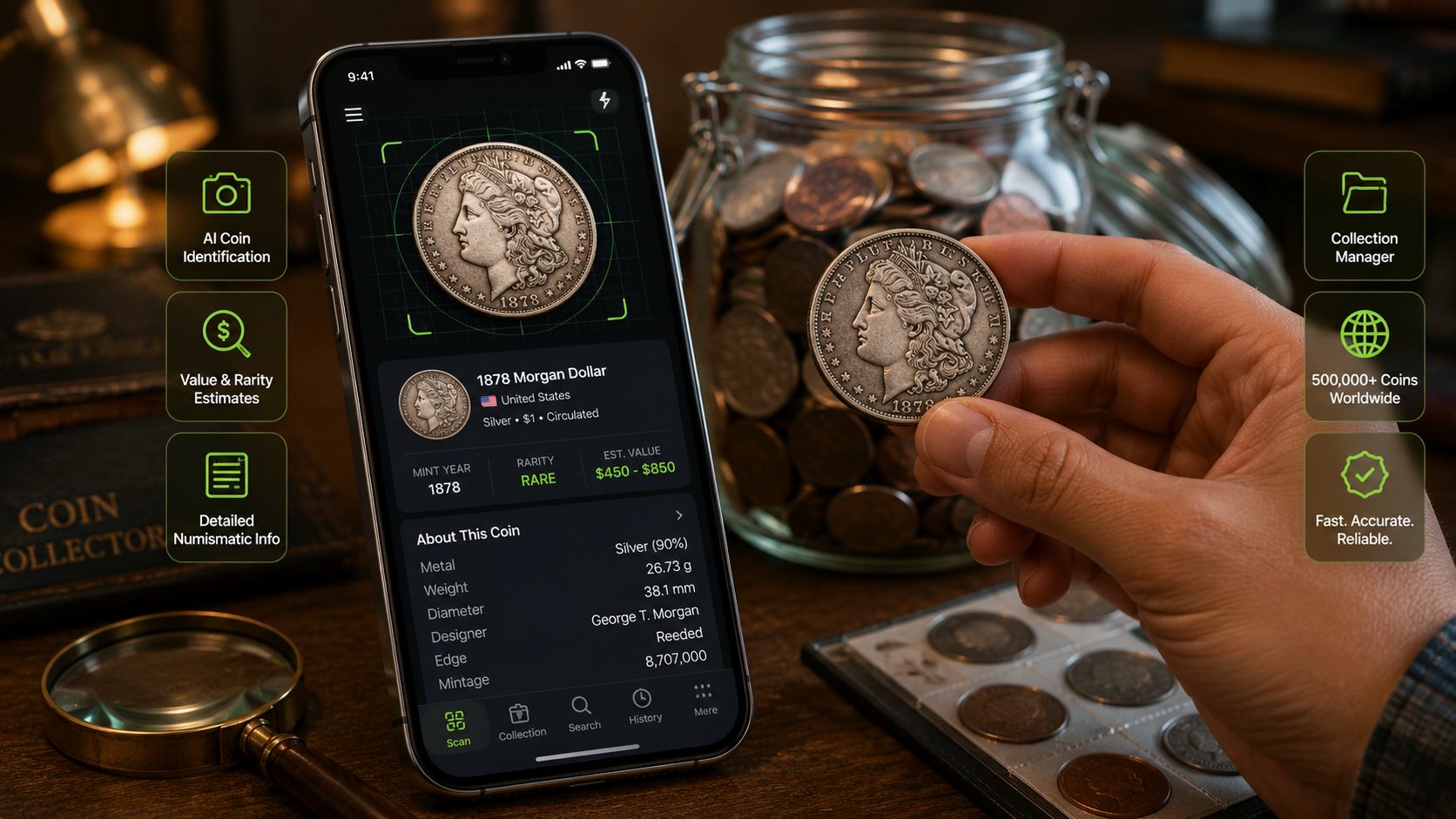
Rare Coin Scanner & Identifier works off two photos - front and back - and checks them against a database it claims spans 500,000-plus coins across countries and time periods, everything from ancient currency to coins still in circulation today. It hands back an identification, an estimated mint year, a rarity indicator, and a market value range, so you're not the one cross-referencing blurry catalog photos by hand.
What a scan actually gives you
- AI coin identification: aim your camera at a coin and get its name, country of origin, and denomination back within seconds.
- Value and rarity estimates: an estimated market value range paired with a rarity grade, so you get a rough sense of what you're holding.
- Full numismatic detail: metal type, weight, diameter, designer, edge type, and mintage numbers for whichever coins have that data on file.
- A built-in collection manager: sort scanned coins into folders by country, era, or metal type instead of scattering notes everywhere.
- More than just the common stuff: it handles error coins and foreign currency too, not only standard pennies, dimes, and quarters.
Getting a photo the app can actually work with
- Shoot both sides under even, natural light - a coin's date and mint mark tend to be tiny, and harsh shadows or flash glare can hide exactly the detail the scan is looking for.
- Set the coin on a plain background with good contrast rather than a busy table, so its edges read clearly in the photo.
- Shoot straight down from directly overhead instead of at an angle - a tilted shot distorts the coin's proportions enough to throw off diameter and design matching.
- If a coin looks worn or corroded, grab a close-up of just the date and mint mark, since those two details usually carry more weight for identification than the rest of the design.
What actually drives a coin's value
It helps to know roughly what the app is factoring in before you take a value estimate at face value. Age by itself is a weak signal - plenty of genuinely old coins were struck by the millions and sit close to face value, while some far newer coins carry real value specifically because of a printing error or an unusually low mintage in one particular year. Condition matters just as much, if not more: the same coin can swing ten times higher or lower in value depending on wear, scratches, and whether it's ever been cleaned, which collectors near-universally treat as damage rather than an upgrade. That's exactly why a photo-based estimate is a genuinely useful starting point but not the final say - it can flag "worth a closer look" far faster than paging through a catalog yourself, but it can't fully judge physical condition the way an in-person grading service can.
A few honest caveats
The app itself is upfront that its value and rarity numbers are estimates meant for information, not a formal appraisal - actual worth still hinges on condition, demand, and an expert's read on it, especially once a coin might genuinely be worth something. It's still early stage, with 1K+ downloads and no public rating yet, so you'd be an early adopter here rather than leaning on a long history of reviews. It won't take the place of a professional grading service for a coin that turns out to be truly rare, but as a fast first pass to sort ordinary change from something worth a second look, pointing a camera at it beats guessing every single time.
If a Coin Actually Scans as Valuable
- Stop touching it with bare fingers - skin oils can speed up corrosion on older coins or precious-metal ones, so switch to holding it by the edges or wearing cotton gloves from here on.
- Store it somewhere it won't rub against other coins or your keys - even light surface scratches can noticeably knock down a collectible coin's grade.
- Resist any urge to polish, clean, or "restore" it yourself - this is by far the most common way people accidentally torch most of a find's real value.
- For anything the app flags as notably rare or high-value, take it to a local coin dealer or a professional grading service rather than trying to sell it off the app's estimate alone.
Keeping Your Expectations Realistic
Worth being honest going in: the vast majority of old coins turned up in a jar or drawer land close to face value, not a life-changing find. That's completely normal and doesn't mean the scan got it wrong - most coins simply aren't rare. What an app like this really buys you isn't striking gold, it's cutting the guesswork out fast, so you're not burning hours researching a coin that was never going to be worth much, while still catching the rare case where a genuine second look pays off.
Frequently Asked Questions
Should I clean a coin before I scan or sell it?
No. Even gentle cleaning is generally treated as damage by collectors and can meaningfully drag down a coin's value. Leave anything potentially valuable exactly as you found it until someone knowledgeable has weighed in.
How reliable is the value estimate?
It's a reasonable starting range built from the coin type and general market data, but it can't fully account for the coin's actual physical condition, which is one of the biggest levers on real-world value. Treat it as a first-pass filter, not a final figure.
Does it handle foreign or ancient coins, or just modern ones?
Yes - the identification database spans countries and eras, foreign currency and older historical coins included, not just standard modern denominations.